
It’s hard to overstate the pervasiveness and volume of the conversation about the potential of Artificial Intelligence. Last year, Goldman Sachs estimated that “generative AI could expose the equivalent of 300mn full-time jobs to automation” globally. A FactSet analysis of earnings calls over the past 10 years shows that 179 S&P500 companies cited the term “AI” during their earnings call for the fourth quarter, vs. a 10-year average of 45.
However, talking with business leaders and managers reveals that several misconceptions persist, often creating barriers to the practical applications of this new technology platform.
Myth 1: AI is Always Transformative
Myth: AI inherently brings about transformative change, unlocking creativity, generating new ideas, and making new opportunities suddenly accessible.
Reality: While AI technology excels at expediting and scaling specific processes, it is not a panacea for all business challenges.
AI’s primary strength lies in its ability to reduce operational costs and free up valuable time for strategic thinking and innovation. However, it does not independently unlock creativity or generate new ideas. The transformative potential of AI is realized when it is integrated thoughtfully into business operations, augmenting human intelligence and taking over rote tasks, rather than attempting to replace creativity and strategic insight.
Myth 2: It’s All About Custom GPTs for Employees

Myth: AI adoption is about creating and deploying custom GPTs to allow employees to find information better and more efficiently.
Reality: The rise of sophisticated AI models like GPT-4 has heightened interest in their potential applications within businesses. However, limiting the scope of AI to custom chatbots for employees is a narrow view. AI’s capabilities extend far beyond conversational agents. Key areas where AI can make a significant impact include:
- Text Analysis: Automating the extraction of data and concepts from complex documents.
- Data Processing: Identifying anomalies and patterns within large datasets.
- Analytics: Extracting narratives and insights from real-world data to inform decision-making.
- Content Generation: Rapid and scalable creation of documentation and other written materials.
Each of these applications demonstrates how AI can enhance various business functions, driving efficiency and uncovering new opportunities.
Myth 3: Low Reliability is a Show-Stopper

Myth: LLMs such as ChatGPT or Claude are inherently unreliable, and their hallucinations make them unsuitable for business purposes.
Reality: Concerns about AI’s reliability, particularly the issue of AI hallucinations (when a model generates incorrect outputs that appear to be logical at first blush), are well-founded. However, while it is true that unsupervised AI can make errors, advances in multi-agent designs have significantly improved AI’s reliability and performance. By employing multiple AI systems that cross-verify each other’s outputs, the likelihood of errors can be greatly reduced.
We know how to manage imperfect employees: supervision. Design processes so that multiple AI-powered agents verify each other’s work and methodology.

Myth 4: AI is Plug-and-Play
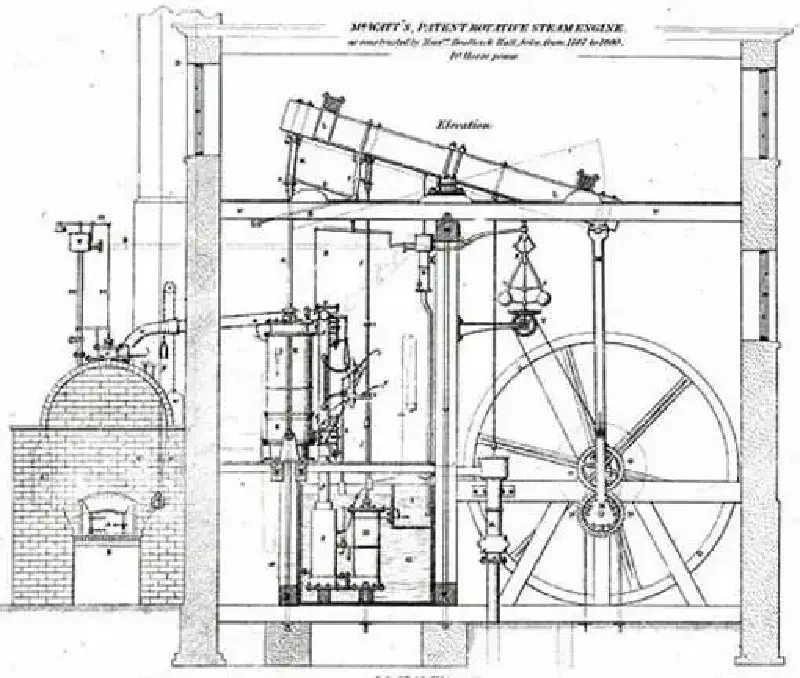
Myth: AI can be seamlessly integrated into existing systems without significant adjustments.
Reality: Historical parallels, such as the commercialization of James Watt’s steam engine, illustrate that adopting new technologies almost always requires substantial changes to surrounding systems and processes. Similarly, to harness the full benefits of AI, businesses must be prepared to transform and adapt their operations. This might involve restructuring workflows, retraining staff, and investing in new infrastructure. The journey to effective AI integration is incremental and necessitates a strategic approach.
Myth 5: You Need to Change Everything

Contrary to the belief that adopting AI necessitates a complete overhaul of existing systems, a more pragmatic approach involves gradual transformation.
Businesses can start by redesigning specific processes and integrating AI incrementally. This allows for the careful management of change, minimizing disruption and risk. Organizations can steadily build a robust AI-enabled ecosystem without overwhelming their resources or workforce and minimizing risks, by working in concentric circles—beginning with pilot projects and progressively expanding AI’s role.

AI adoption, while promising, is often shrouded in myths that can lead to unrealistic expectations or unwarranted fears. Understanding that AI is a tool to augment rather than replace human intelligence; recognizing its diverse applications beyond chatbots; addressing reliability concerns through robust process design; and approaching integration as a gradual process are all crucial factors to raise the likelihood of successful AI adoption and to avoid being caught in the hype / disillusionment cycle.
Originally published on LinkedIn in May 2024.